 by KohRongProperty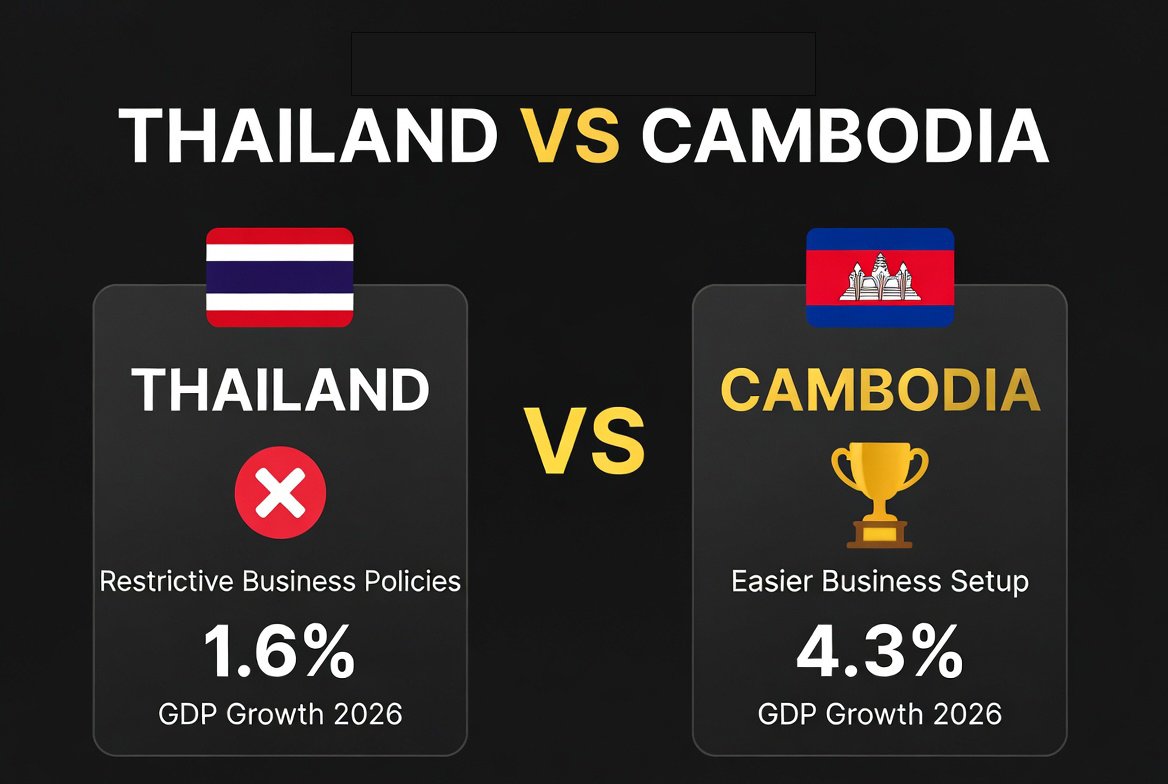
Thailand Vs Cambodia = It Is Not Even Close!
Why Cambodia Is a Stronger Investment Destination Than Thailand Right Now – My Take from Living Here in for 10 years and working in the real estate industry.
Hey everyone, As someone based right here on Koh Rong (KH), I’ve been watching Southeast Asia’s investment landscape closely. In 2026, Cambodia stands out as the more dynamic and foreigner-friendly option compared to Thailand for business setup, investing, and real estate plays. Higher growth potential, easier ownership rules, smoother banking, and practical advantages make it the place with real upside for agile investors. Here’s a breakdown of the key reasons why Cambodia edges out Thailand based on current data and on-the-ground realities.
1. Stronger Economic Growth Trajectory Cambodia is still in its high-growth phase with a younger population and ongoing manufacturing/digital shifts driving momentum.
- World Bank (January 2026 Global Economic Prospects): Cambodia’s GDP growth projected at 4.3% in 2026, rebounding to 5.1% in 2027.
- IMF (January 2026 update): Around 4.0% for 2026.
Thailand, more mature and facing headwinds like high household debt and slower tourism recovery:
- World Bank (February 2026 Thailand Economic Monitor): 1.6% in 2026, edging up to about 2.3% in 2027.
- IMF: Similar 1.6% for 2026.
Higher base growth in Cambodia means bigger opportunities for early entrants in sectors like manufacturing, renewables, and services.
2. Easier Business Setup and Management for Foreigners – Cambodia’s investment regime is streamlined and pro-foreigner. The 2021 Investment Law (still driving policy in 2026) plus full digitization allow quick company registration with low taxes and incentives like 15-year tax holidays in priority areas. Prime Minister Hun Manet confirmed in March 2026 at the Cambodia-ASEAN Business Summit: 100% foreign ownership in nearly all sectors (real estate development, manufacturing, tourism, digital finance, etc.), no mandatory local partners required.
Thailand’s Foreign Business Act (FBA) remains restrictive in many areas, with intensified enforcement in 2026. Recent Department of Business Development (DBD) rules (effective January and proposed April 2026) crack down on nominee structures, requiring extra documentation, bank statements for Thai shareholders, and even in-person verifications for amendments involving foreigners. This adds layers of scrutiny and cost for foreign-controlled setups.
3. Simpler Bank Account Opening for ForeignersOpening a personal or business bank account in Cambodia is straightforward in 2026—often just needing a passport (valid 6+ months), visa, and small initial deposit (around $10–$50 depending on the bank). USD accounts are common, and the process can take as little as an hour in person.
In Thailand, it’s gotten noticeably harder due to Bank of Thailand’s Customer Due Diligence (CDD) tightening. Many banks now prioritize long-term visa holders (e.g., LTR, retirement, or work visas), rejecting or complicating applications for shorter-stay or tourist/DTV holders. Expat reports highlight frequent rejections without strong residency proof.
4. More Flexible Crypto Environment – Cambodia has moved toward regulated openness. The National Bank of Cambodia’s December 2024 Prakas (effective into 2025–2026) allows licensed banks and payment institutions to handle backed crypto assets, stable coins, and related services (with NBC approval). This provides practical flexibility for businesses integrating crypto.
Thailand regulates crypto more stringently with taxes, licensing requirements, and compliance burdens, making everyday use costlier and more restricted.
5. Practical Real Estate and Land Access for Foreigners – Direct land ownership is restricted in both countries, but Cambodia offers workable solutions:
- Full foreign ownership of strata-title condos (above ground floor).
- Long-term renewable leases (50+ years common, perpetual options available).
- Trust structures under the 2019 Trust Law (updated use in 2026), where licensed banks hold title for foreigners, protecting assets effectively.
These feel more accessible and commonly used for investment. Thailand’s condo foreign quota (49% per building) and stricter BOI land rules for businesses add hurdles, with recent tightenings on criteria.
Final Thoughts – Cambodia is actively rolling out the welcome mat in 2026—full ownership freedom, solid growth, easier banking/crypto, and creative real estate paths—while Thailand tightens rules on nominees, banking, and foreign involvement, making it feel less open for new or smaller-scale foreign players. Of course, Cambodia has challenges like evolving infrastructure and enforcement consistency, but for growth-focused investors comfortable with frontier dynamics, the asymmetry is compelling. Thailand offers maturity and stability for larger, established operations. This isn’t financial or legal advice—always consult local experts and do your due diligence. Key Sources (2026 or latest relevant reports):
- World Bank Global Economic Prospects (Jan 2026) & Thailand Economic Monitor (Feb 2026)
- IMF World Economic Outlook Update (Jan 2026)
- Press statements from PM Hun Manet / Cambodia-ASEAN Business Summit (March 2026) via Khmer Times, Kiripost, and official channels
- National Bank of Cambodia Prakas on Cryptoassets (Dec 2024, ongoing framework)
- DBD Thailand nominee crackdown updates (Jan–April 2026 proposals) via Fosr Law, Silk Legal, Lex Bangkok
- Expat/business guides on banking (e.g., YouTube overviews, MBMG reports for Thailand)
- Property law overviews (e.g., The Wandering Investor, Rumavi on titles/trusts)
If you’re eyeing a move or investment here, hit me up on +85586223111 (WhatsApp.) I would happy to share local insights or connect you with reliable contacts. Cambodia is primed for 2026. Let’s build!
Here is what The Wandering Investor had to say last time he was on Koh Rong.